
Head race cancelled? How stream and weather decisions are made
Heads on tidal and fast rivers are called off more often than people expect. Here is why, and how to plan for it.
By Civil Digital, the team building BoatLog · Last updated
BoatLog is independent software from Civil Digital. It is not affiliated with or endorsed by British Rowing or any organisation named in this guide. Always check the current official guidance and follow your club's own procedures.
Why races get cancelled
Organisers cancel or shorten races when conditions make racing unsafe: strong stream, high wind, storms or poor visibility. Several Tideway heads have been lost to weather in recent years. The organiser, working with the event's safety team and the navigation authority, makes the call.
How your club can plan
- Watch the organiser's website and social channels in the days before.
- Know the refund and re-entry rules before you enter.
- Agree a cut-off for loading the trailer.
- Have a plan B session at home.
Your own water
The same judgement applies at home. Your club's high-water rules and daily flag decide whether crews go out.
How BoatLog helps
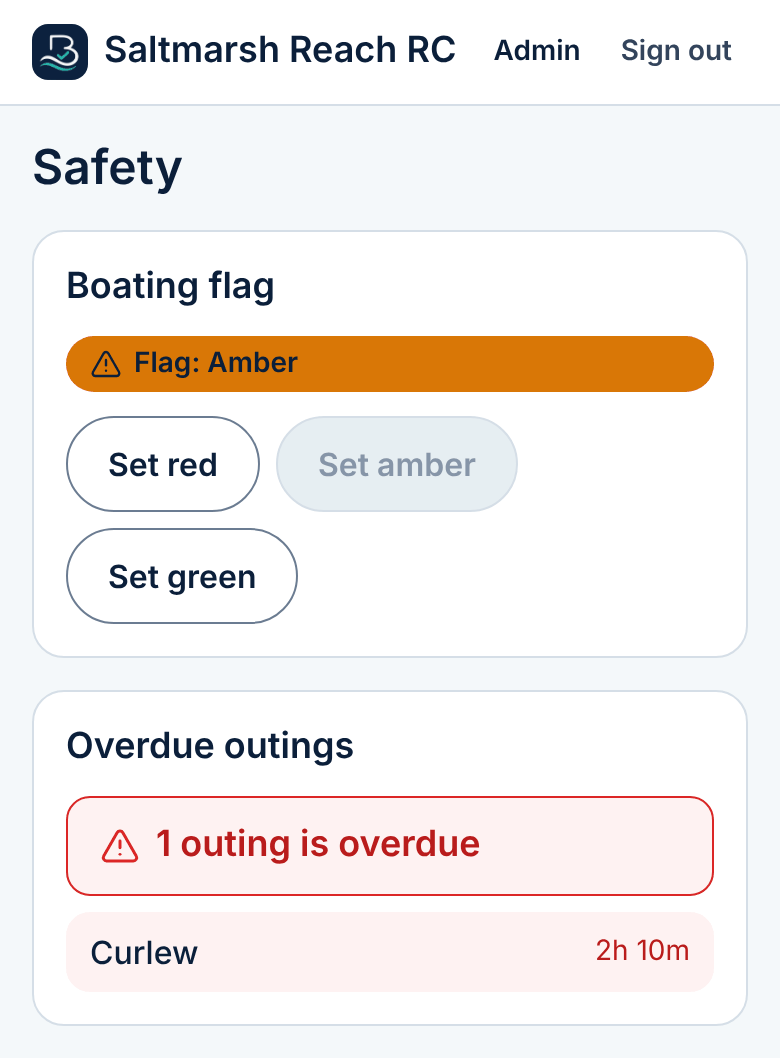
BoatLog's safety flag shows every member the club's go/no-go decision at sign-out, and the rowing calendar lists this season's heads.
Questions
FAQ
Why are rowing head races cancelled?
Usually for strong stream, high wind, storms or poor visibility that would make racing unsafe.
Who decides whether a head race goes ahead?
The organiser, with the event's safety team and the navigation authority.
Do you get a refund if a head race is cancelled?
It depends on the event's rules. Check them before you enter.
Related
More from BoatLog
Run a safer, simpler boathouse
Sign-out, safety flags, incidents, repairs and qualifications in one app built for UK rowing clubs. Start a free 14-day trial, no card required.