
Rowing in floods and strong stream: when to stop
High water causes more stand-downs than anything else in winter. Here is how to make the call consistently.
By Civil Digital, the team building BoatLog · Last updated
BoatLog is independent software from Civil Digital. It is not affiliated with or endorsed by British Rowing or any organisation named in this guide. Always check the current official guidance and follow your club's own procedures.
Why strong stream is dangerous
Faster water reduces control, carries debris, pushes boats onto bridges and moored craft, and makes a capsize far more serious. Landing stages can flood or sit at awkward angles. British Rowing's safety alerts and RowSafe both treat flood conditions as a reason to stop or restrict rowing.
Set your own limits
There is no single national threshold. Your waterway is different from the next club's. Use what your club can actually measure (an Environment Agency river level gauge, local warning boards, a marker post on the bank) and write down what each level means: normal, restricted (experienced crews, launch cover) or no boating.
Watch for the warning signs
- Water rising overnight after heavy rain upstream.
- Debris or whole branches coming down.
- Landing stage or towpath under water.
- Arches and bridges with less headroom than usual.
How BoatLog helps
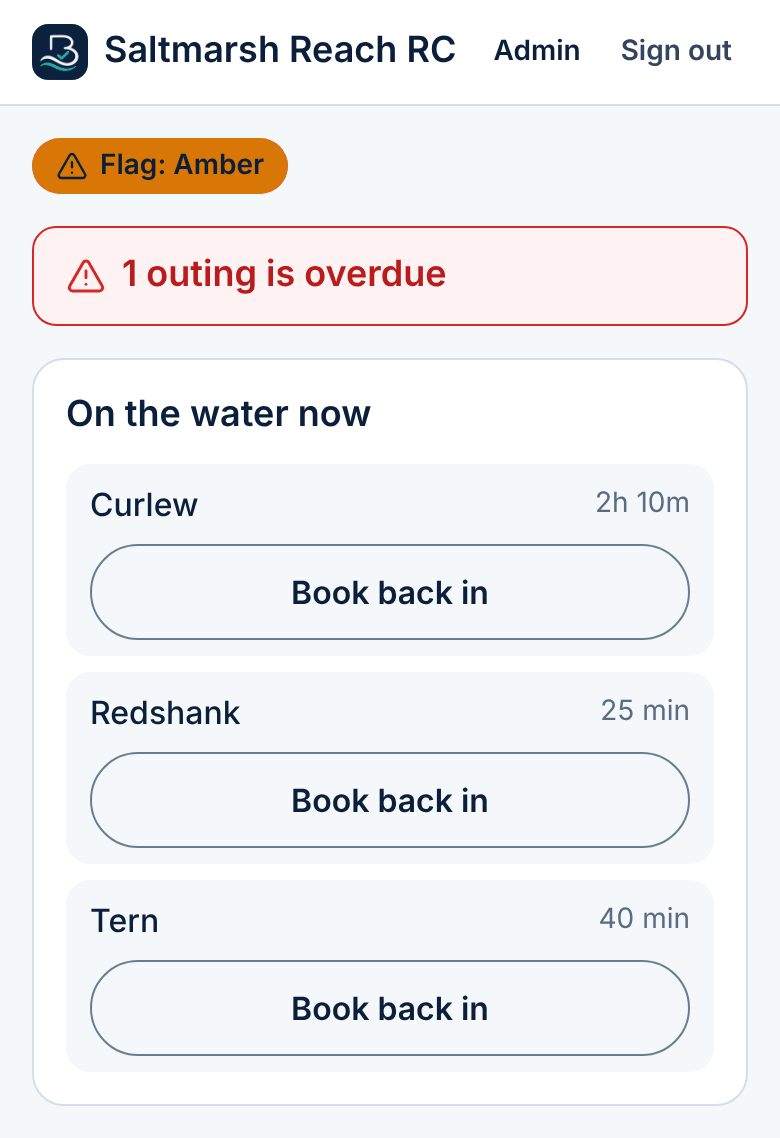
BoatLog turns the decision into a club-wide flag that members see before they sign a boat out, and shows who is already out if the river comes up mid-session. Overdue-outing alerts flag any crew that has not come back on time.
Questions
FAQ
Is there an official river level at which rowing must stop?
No single national figure applies everywhere. Clubs set limits for their own stretch of water in their risk assessment, using local gauges and warnings.
Should a stand-down because of high water be recorded?
It is good practice to record the decision, and any near miss or incident that happens in high water should be reported.
Who decides whether the club can boat?
Normally the club's rowing safety adviser or a nominated competent person, using the club's written rules.
Related
More from BoatLog
Run a safer, simpler boathouse
Sign-out, safety flags, incidents, repairs and qualifications in one app built for UK rowing clubs. Start a free 14-day trial, no card required.