Coastal rowing and beach sprints: safety basics
The sea is a different environment from a river. Here are the basics clubs plan around.
By Civil Digital, the team building BoatLog · Last updated
BoatLog is independent software from Civil Digital. It is not affiliated with or endorsed by British Rowing or any organisation named in this guide. Always check the current official guidance and follow your club's own procedures.
What changes at sea
- Waves, swell and surf, which change quickly with the wind and tide.
- Tides and currents that can carry a boat away from the shore.
- Colder water and longer distances from help.
- Launching and landing through surf, the riskiest moment in a beach sprint.
Planning
- Check the forecast, tide times and sea state before every session.
- Agree limits for wind and waves in your risk assessment.
- Buoyancy aids, safety cover and a way to call for help.
- Sign out with a route and a return time.
RowSafe has a chapter on rowing on the sea, including beach sprint risk management in the 2026 edition.
How BoatLog helps
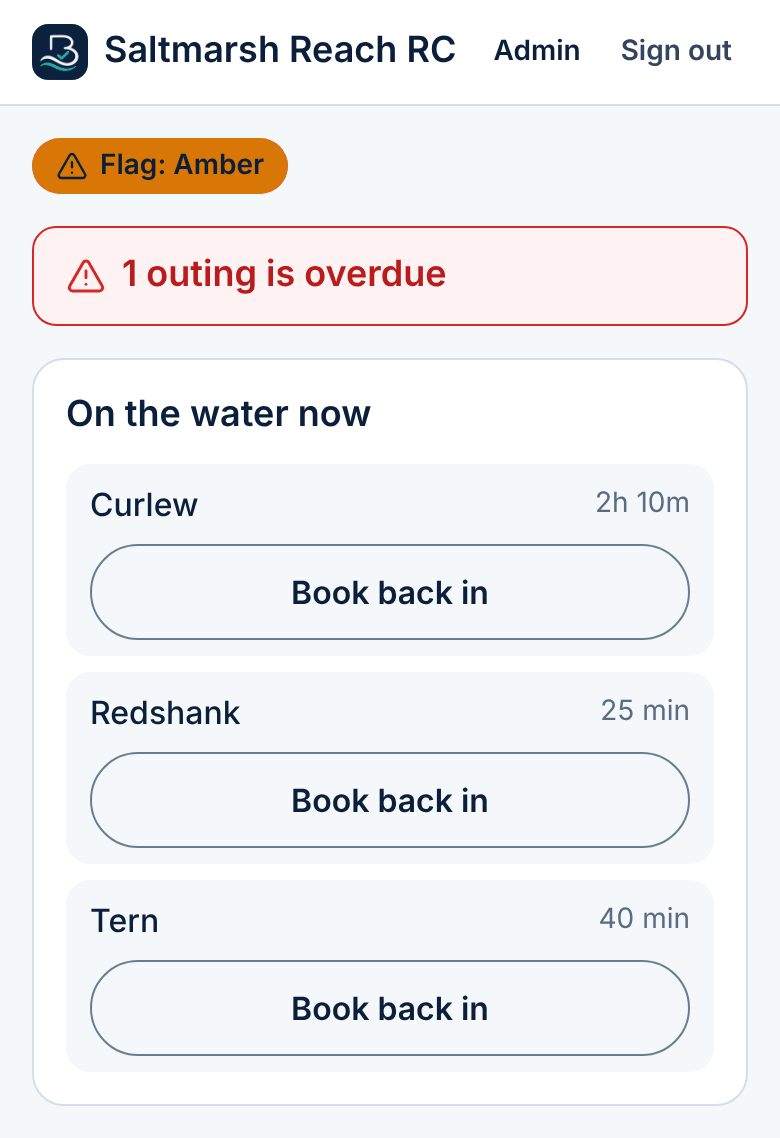
At sea, knowing who is out matters even more. BoatLog records every outing with a return time and flags an overdue boat, and the club's flag can carry the day's sea-state rule.
Questions
FAQ
Is coastal rowing more dangerous than river rowing?
It has different risks: waves, tides, cold water and distance from help. Clubs manage them with planning, limits and safety cover.
What is a beach sprint?
A short coastal race: crews run from the beach to their boat, sprint out around buoys and back, then run to the finish line.
Does British Rowing have coastal safety guidance?
Yes. RowSafe includes a chapter on rowing on the sea, with beach sprint risk management in the 2026 edition.
Related
More from BoatLog
Run a safer, simpler boathouse
Sign-out, safety flags, incidents, repairs and qualifications in one app built for UK rowing clubs. Start a free 14-day trial, no card required.