
River circulation patterns for rowing, explained
Which side of the river to row on, where to turn and where not to stop.
By Civil Digital, the team building BoatLog · Last updated
BoatLog is independent software from Civil Digital. It is not affiliated with or endorsed by British Rowing or any organisation named in this guide. Always check the current official guidance and follow your club's own procedures.
What a circulation pattern is
A circulation pattern is the agreed set of traffic rules for a stretch of water: which side to keep to in each direction, where to turn, where to overtake and any hazards to avoid. There is no single national pattern. Each stretch has its own, set locally and often shared between the clubs that use it. On the tidal Thames, the Tideway Code applies.
Making sure it's followed
- Post the map at the boathouse and on the landing stage.
- Brief every new member, cox and visiting crew.
- Include it in your risk assessment.
- Report near misses that suggest the pattern isn't working.
How BoatLog helps
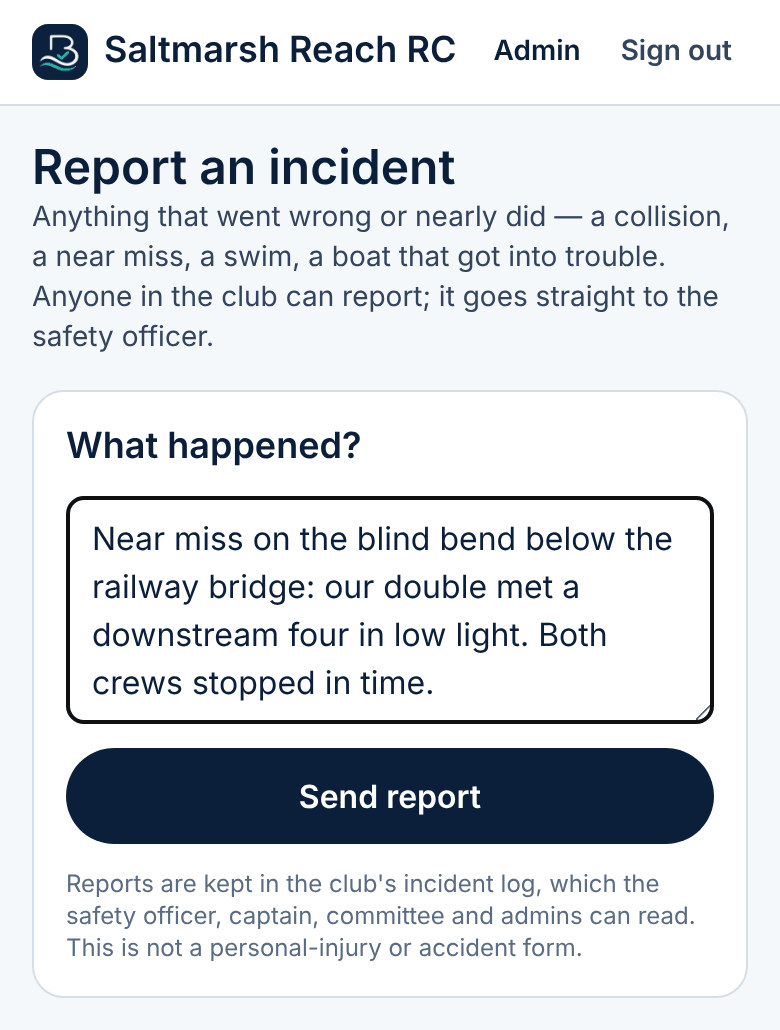
When crews meet head-on, the details matter. BoatLog lets anyone report a near miss from their phone, so the safety adviser can spot where the pattern needs changing.
Questions
FAQ
Which side of the river do rowers row on?
It depends on the local circulation pattern. Many stretches keep to the right-hand side relative to the direction of travel, but always check your local rules.
Is there a national rowing circulation pattern?
No. Each stretch of water has its own, set locally.
Where can I find my river's circulation pattern?
Ask your club. Patterns are usually posted at the boathouse and shared between local clubs.
Related
More from BoatLog
Run a safer, simpler boathouse
Sign-out, safety flags, incidents, repairs and qualifications in one app built for UK rowing clubs. Start a free 14-day trial, no card required.