
After the regatta: a boat check and repair routine
Trailers and racing are hard on boats. Ten minutes on unloading saves the next crew a nasty surprise.
By Civil Digital, the team building BoatLog · Last updated
BoatLog is independent software from Civil Digital. It is not affiliated with or endorsed by British Rowing or any organisation named in this guide. Always check the current official guidance and follow your club's own procedures.
On unloading
- Check each hull for cracks, chips and soft spots, especially at the bow and where it sat on the trailer.
- Check riggers, gates and nuts, which loosen on the road.
- Check fins, rudders and steering lines.
- Check heel restraints and bow balls; see our pre-outing check.
- Count the oars, slings and spanners back in.
If you find damage
Log it straight away, while you remember what happened, and mark the boat out of use if it isn't safe. Tell the boatman, and report any incident from the trip.
How BoatLog helps
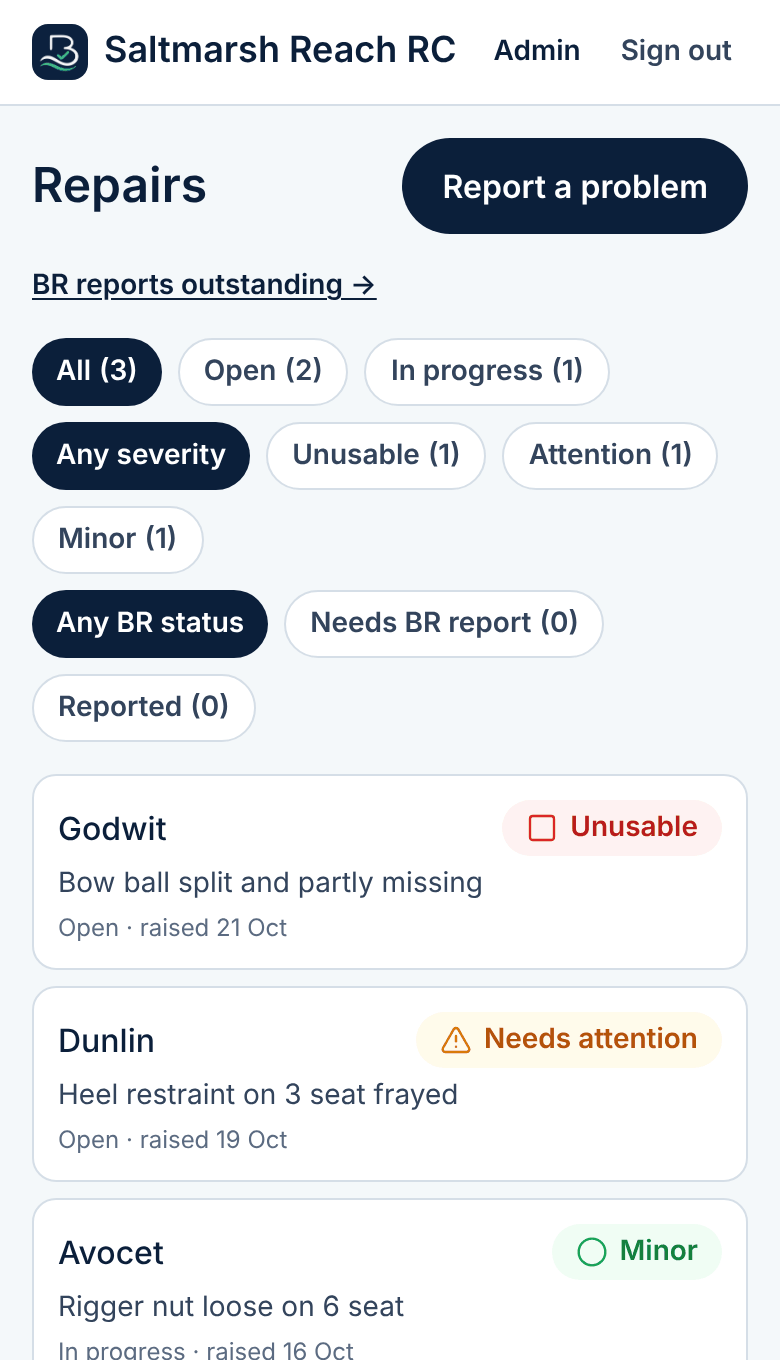
In BoatLog anyone can report damage from their phone as the trailer is unloaded. A serious defect takes the boat out of service so it can't be signed out until it's repaired.
Questions
FAQ
What should you check on a rowing boat after a regatta?
The hull, riggers and nuts, fins and rudders, heel restraints and bow balls, and that all the kit came back.
Who is responsible for checking boats after a trip?
Clubs usually make it the crew's or trailer team's job on unloading, with the boatman following up any damage.
Should damage from a regatta be reported to British Rowing?
If there was an incident, such as a collision, it should be reported through British Rowing's incident reporting.
Related
More from BoatLog
Run a safer, simpler boathouse
Sign-out, safety flags, incidents, repairs and qualifications in one app built for UK rowing clubs. Start a free 14-day trial, no card required.